Where the Service Boundary Falls
Tennessee includes urban, small-town, and rural residential settings, so heater rooms and access routes vary. The Cumberland River Bicentennial Trail, Great Smoky Mountains National Park, and Pellissippi State Community College offer distinct statewide reference points, but none establishes a property's flood status.
Tennessee's usual winter and early spring flood season can shape when residents watch for water concerns. A heater spill still depends on the indoor room and its surfaces. Nearby stored belongings may also show whether water reached beyond the heater.
Homes and small businesses across Tennessee may face indoor water after heavy rain, overflowing rivers or streams, or drainage trouble. State landmarks include the Cumberland River Bicentennial Trail, Cross Creeks National Wildlife Refuge, and Beersheba Springs Historic District. Each request starts with the conditions at the property.
Check for Electrical Danger
- POOLED WATER
- Extraction addresses water visible on the floor; it does not establish how far moisture entered nearby materials.
- FLOOR REACH
- A doorway or floor transition can help trace the spill's route out of the heater area.
- UTILITY ACCESS
- Trim may stay swollen or discolored after the open floor no longer looks wet.
- WALL CLUES
- Moisture readings in suspect materials can be compared with readings in unaffected areas.
- STORED ITEMS
- A written work description can record the areas included in removal and follow-up checks.
- DRYING PHASE
- In Tennessee, seasonal indoor temperature shifts can change how a shallow puddle looks over time. Water may remain beneath nearby trim or stored items after the surface changes. The pros we connect you with can check those materials after extraction; appearance alone cannot confirm dryness.
- SOURCE REPAIR
- an estimated $700–$1,400
Clues Around the First Water Entry
Basement waterproofing limits future water entry. Heater leak extraction addresses water already spread across an indoor floor, so the two services have different goals and work descriptions. Basement waterproofing addresses future water entry through or around a structure. Heater leak extraction handles a current indoor spill. Check the work description: waterproofing focuses on entry control, while extraction lists removal of water already on the floor.
Water Removal Across Indoor Spaces
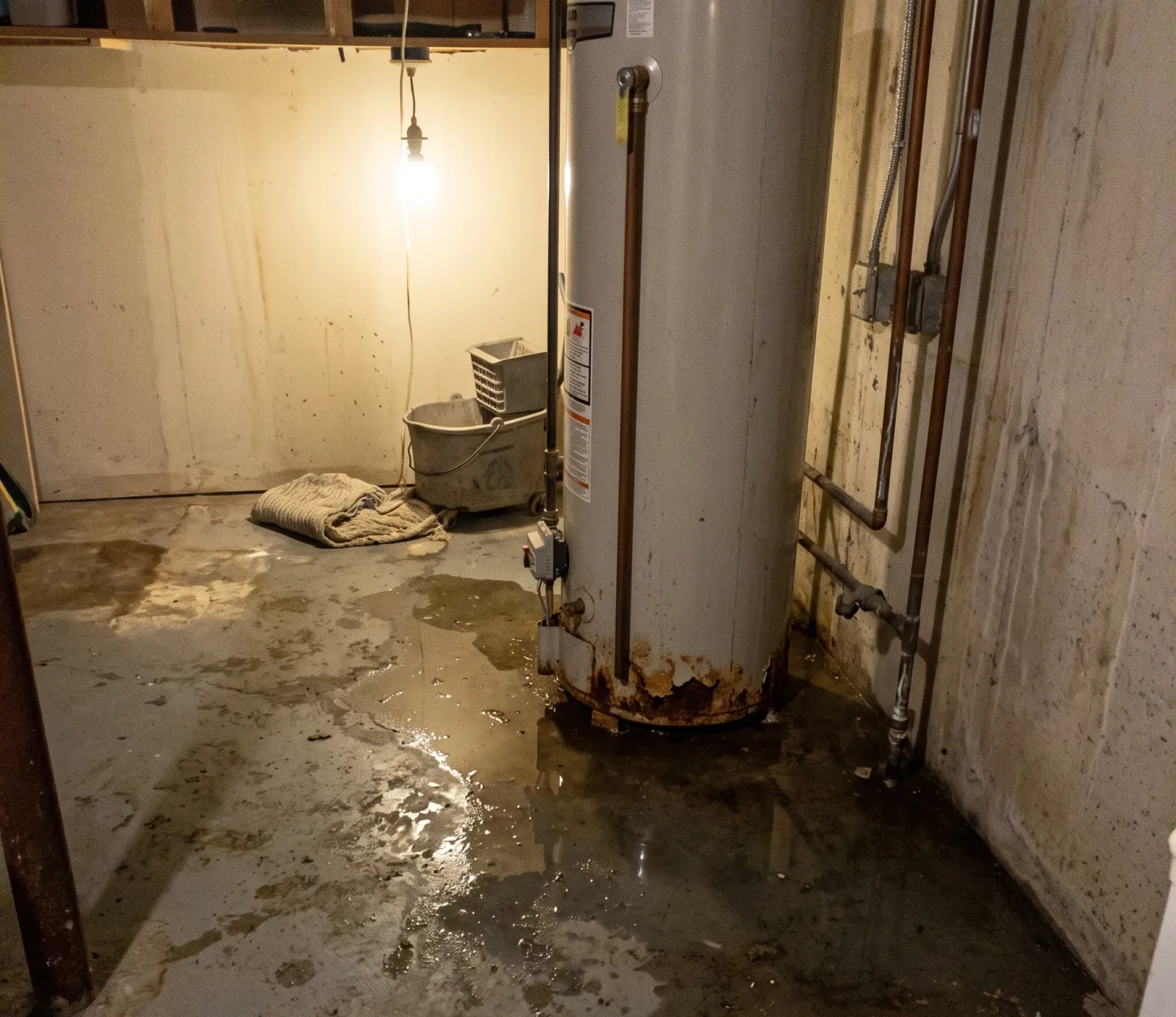
The provider begins by checking whether the utility area is safe to approach. They compare the visible pool with damp marks on the floor, trim, and nearby materials. This helps distinguish water sitting on a surface from moisture that may have moved into adjoining areas.
Once access is safe, extraction equipment lifts water from the affected floor. The provider can then take moisture readings along wall bases, beneath accessible stored items, and across floor transitions. Those readings help identify areas that may need drying beyond the visible spill.
When water sits on an open, reachable surface, removal may fit one appointment. A moisture check can reveal damp materials that need later drying. Ask the pros we connect you with to explain what was removed and what follow-up remains. Tell the licensed pros we connect you with which areas still have standing water when you call.
FROM FLOOR PUDDLES TO MOISTURE LEFT BEHIND
| Site Access |
Moisture Follow-Up |
|---|
| Water gathered in connected rooms | Address flood-map check |
| Pooled water builds back after pumping | Written work records |
| Wet trails extending between interior rooms | Draw out pooled water; prepare drying |
Water Context Near Hatchie, Hiwassee and Cross Creeks
From a dry area, photograph the heater label, display, and visible waterline. Keep people and pets away from the wet room. Do not move the heater, reach through water, or handle wet electrical equipment. Share the photos and the room layout with the provider.
What to Keep for Your Insurance File
A wet utility room can mean slick footing and possible electrical danger. Water may spread across the floor beyond the heater itself. Do not touch a heater, outlet, appliance, or cord if it may be wet. Nearby trim and belongings may also hold moisture after a spill. A dry-looking path does not make wet equipment safe to handle.
Which Tools Can Clear Pooled Water?
A small wet area and a water-filled lower level may call for different setups; ask the pros we connect you with to explain their written scope.This Tennessee guide covers standing-water removal; no verified local price band is available. Area, water volume, access, and requested work shape the estimate. The estimate should make clear whether the request covers standing water removal alone. Ask the pros we connect you with about any visit charge and confirm exact tasks in writing.See pricing guide to learn how costs are determined, then use Basement Water Extraction for help with water remaining on floors.